
A high-quality Luo Han Guo extract program starts with specification control. Food and beverage manufacturers may need a moderate Mogroside V grade for cost-sensitive blends, a higher-purity extract for low-dose applications, or several grades for different formulas and markets. The right manufacturer should make those choices practical by supplying traceable samples, clear assay methods, consistent powder characteristics, and documents that match the ordered material.
HuachengBio manufactures H2-Luo Monk Fruit Extract from Siraitia grosvenorii fruit and supports a broad Mogroside V range. This guide explains how diverse specifications affect formulation and why buyers should compare cost in use rather than price per kilogram.
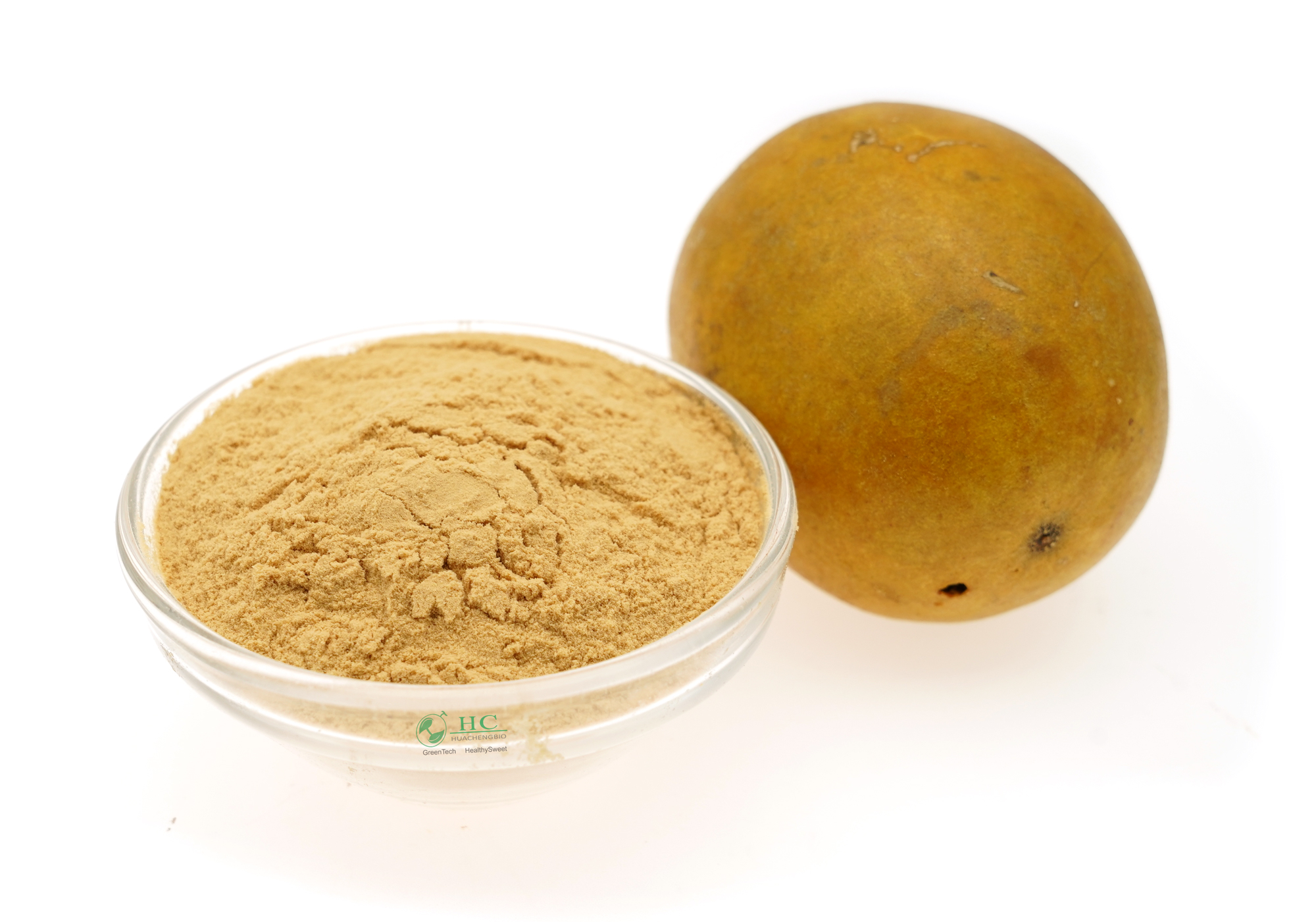
Mogroside V percentage is not a simple quality ranking. It is a practical formulation variable. A higher assay generally allows a lower use level, while a lower assay may be easier to dose in some premix systems or may fit a different cost target. Powder color, flavor intensity, particle handling, and the rest of the sweetener system also affect whether a grade works in the finished product.
A beverage developer may prioritize a clean taste and low color contribution. A tabletop or dry-blend product may need a grade that is easier to meter. A bakery team may compare the extract with a carrier or bulking system because the small monk fruit dose cannot replace sucrose's volume. The specification should therefore be chosen against the product matrix, not selected from a catalog by assay alone.
For a direct manufacturer, the useful question is not simply "What is your highest purity?" Ask which grades are routinely produced, which assay method controls release, what sample size is available, and how the proposed grade changes dosage, sensory performance, packaging, and cost per finished serving.
Luo Han Guo’s botanical name is Siraitia grosvenorii and the part used is fruit. Its H2-Luo Monk Fruit Extract specification covers Mogroside V from 1.5% to 98%, with common listed options including V20%, V25%, V40%, V50%, V55%, and V90%. The exact grade, assay, appearance, and commercial availability should be confirmed in the quotation and current product specification for the intended market.
The range gives product teams room to match the sweetener to the process. Lower and mid-range grades can be useful where a premix needs more manageable handling or where the commercial target values cost in use. Higher grades can reduce the mass of extract added to a clear drink, a concentrated system, or a formula with tight solids limits. Neither route is automatically better; the approved grade is the one that meets the sensory and process brief with a controlled cost.
The H2-Luo Monk Fruit Extract product route can be used to request the current grade list, sample, assay method, specification, and application discussion. Keep the product name and assay in the RFQ so a quotation does not collapse several grades into one generic line item.
| Grade example | Formulation implication | Handling or commercial question |
|---|---|---|
| V20% or V25% | Higher addition rate than a high-purity extract; may fit a premix or cost target where solids are acceptable. | Can the powder disperse uniformly at the intended batch size? What is the cost per finished serving? |
| V40% or V50% | A middle range for balancing potency, handling, and cost in many food and beverage systems. | Which assay, particle-size, color, and sensory limits apply to the approved sample? |
| V55% | Higher potency can reduce addition mass when the formula has limited solids or a tighter label target. | Does the lower dose change metering accuracy or require a premix? |
| V90% | Very low use level; useful when extract mass and color need close control, subject to sensory fit. | Can the plant maintain uniform dosing and repeat the approved flavor profile? |
| 1.5%-98% range | Allows a project-specific choice rather than forcing one grade into every application. | Which exact grade is routine, available for sampling, and covered by current documents? |
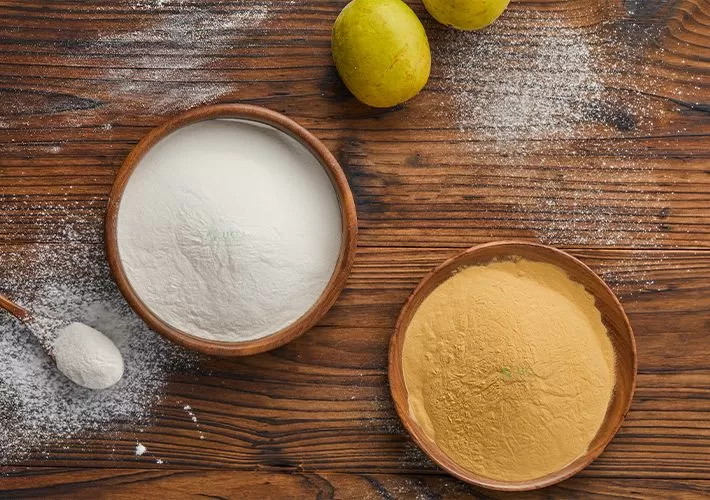
A useful monk fruit extract specification connects identity, assay, appearance, physical handling, and safety testing. The assay confirms the declared active sweetening component, but buyers also need to know how the powder looks, tastes, flows, dissolves, and behaves in the actual formula. A light-yellow or off-white material can be technically acceptable while still changing the visual result of a clear beverage or a pale bakery filling.
HuachengBio uses HPLC as the assay method and describes particle-size control at 80 mesh. The analysis panel also covers appearance, characteristic odor and taste, heavy metals, arsenic, total plate count, yeast and mold, E. coli, and Salmonella. Treat those items as a starting specification. Add moisture, solubility, color, pesticide-residue, residual-solvent, or other tests when the customer brief and product risk require them.
Ask the supplier to separate routine release limits from customer-specific tests. This makes it clear which results appear on every COA, which tests are periodic or third-party, and which controls must be added before a particular retailer, market, or contract manufacturer can approve the ingredient.
| Layer | What it verifies | Buyer check |
|---|---|---|
| Identity | Siraitia grosvenorii fruit extract and the declared sweetening component. | Product name, botanical identity, part used, CAS where applicable, and ingredient statement. |
| Assay | Mogroside V content used to set dosage and compare quotations. | HPLC method, assay basis, acceptance range, and grade shown on the sample and COA. |
| Physical profile | Color, appearance, particle size, flow, and dispersion behavior. | Visual standard, sieve or particle-size method, storage condition, and packaging. |
| Safety panel | Microbiological and contaminant controls for the ordered lot. | Limits, methods, lot release status, and any customer-specific additions. |
| Commercial control | The approved sample can be purchased repeatedly. | Lot traceability, change notice, retained sample, MOQ, lead time, and shelf life. |
A single monk fruit extract grade should not be assumed to work identically in every product. Acidity, protein, minerals, botanical actives, cocoa, flavors, heat, and storage can change perceived sweetness and aftertaste. The same Mogroside V assay can therefore require a different dose or supporting blend in a clear drink, a dairy base, a powdered supplement, or a baked product.
For a beverage application, test sweetness onset, acidity balance, clarity, color, aroma release, pasteurization or hot-fill exposure, and shelf life. For a baking application, test the sweetener separately from the bulking solution. Sugar contributes volume, browning, moisture, spread, and texture; monk fruit replaces sweetness but not those physical functions.
The concentrated juice route may be relevant when a liquid format, fruit profile, or process integration is a better fit than a dry extract. A monk fruit blend sweetener may be more practical when the formula needs a carrier, bulking ingredient, or a different dosing format. Keep those formats distinct in the development record.
A higher Mogroside V assay usually means a lower addition mass, but it does not guarantee the lowest finished-product cost. The calculation should include the approved dose, assay, freight, duty, testing, handling loss, premix preparation, and any supporting flavor or bulking ingredient. A lower-priced powder can become more expensive if it needs a larger dose or creates a sensory correction elsewhere in the formula.
For a fair comparison, request samples of the grades that could meet the brief and calculate cost per finished serving at the sensory-approved dose. Keep the formula, batch size, serving size, and reduction target constant. This lets procurement compare a real formulation outcome rather than a price list that hides the difference between V25% and V90%.
| Field | Why it matters | Record |
|---|---|---|
| Assay and grade | Sets the expected use level and prevents unlike grades being compared. | Mogroside V percentage, assay method, and tolerance. |
| Approved dosage | Connects the ingredient price to the finished product. | Grams per batch, grams per serving, and sensory result. |
| Support ingredients | A lower extract dose may still need a carrier, flavor, or blend adjustment. | Carrier, bulking agent, masking system, or blend ratio. |
| Logistics | Delivered cost can differ from the ex-works powder price. | Pack size, MOQ, freight, duty, Incoterm, and lead time. |
| Scale-up risk | An approved bench grade must remain available and consistent. | Commercial lot, capacity, change control, and retained sample plan. |
The development sample should be treated as a reference, not as a promise that every future lot will taste identical without a specification. Record the manufacturer, grade, lot number, assay, color, dose, formula version, process conditions, and sensory result. Ask whether the sample came from routine production and whether the production site, raw-material source, or extraction process will change for the commercial order.
Move from bench to pilot using the same grade and a realistic production process. Retain the approved sample and the first commercial lot. If the assay passes but the product fails the agreed sensory or appearance reference, the quality agreement should explain how the deviation will be reviewed. This is especially important when several grades are available and the product team may otherwise receive a technically different powder under a similar product family name.
A manufacturer-direct inquiry should request more than a brochure. Ask for the current product specification, representative COA, TDS, SDS, ingredient statement, allergen statement, origin, shelf life, storage, packaging, traceability information, and the production site covered by the documents. Add the tests required by the destination market or customer approval program.
HuachengBio's quality framework identifies sensory, physical and chemical, microbiology, precision-instrument, and sample-room capabilities, with HPLC, GC, AA, and UV-VIS equipment listed. HuachengBio also names certifications and third-party laboratory relationships. Buyers should request the current files and verify certificate holder, site address, scope, issue date, expiry date, and product coverage before using a claim in a customer submission.
For a high-purity or export program, the document review should also check whether the exact assay grade, carrier, packaging format, and intended use are covered. A site-level certificate does not automatically answer every product or market question.
Diverse specifications are commercially useful only when the manufacturer can produce the approved grade repeatedly. HuachengBio's industry-chain information describes monk fruit seedling work, planting, R&D, manufacture, QC, and resource management. It also states a Mogroside V50% capacity of 650 MT/Y. Use these figures as a reason to ask better scale-up questions, not as a substitute for confirming current availability of the exact grade.
The RFQ should ask which grades are routine, what annual volume can be reserved, how harvest variation is managed, how long a production slot takes, and what notice period applies to raw-material, process, site, method, or specification changes. If the project will use several grades across multiple products, ask whether the supply plan can keep the grades separate and traceable.
HuachengBio can support a project that needs more than one Luo Han Guo extract specification. The product route gives buyers a starting point for comparing Mogroside V grades, while the industry-chain and quality routes support questions about raw materials, production, testing, and documentation. That combination is useful when a beverage, bakery, supplement, or tabletop program needs different potency or handling targets.
Send the finished-product brief and ask for a grade recommendation supported by samples and current documents. Approve the material only after the assay, sensory result, application performance, specification, and commercial terms point to the same product identity. Then define the retained-sample and change-control process before the first bulk order.
Share your application, Mogroside V target or acceptable range, sweetness benchmark, process conditions, destination market, document checklist, pilot quantity, and annual forecast. HuachengBio can then recommend suitable Luo Han Guo extract grades and prepare a manufacturer-direct sampling and quotation package.
Contact HuachengBio for grades, samples, and quotationHuachengBio's product information covers 1.5%-98% Mogroside V and lists common grades such as V20%, V25%, V40%, V50%, V55%, and V90%. Confirm the current available grade, assay tolerance, sample lot, and documents for your market before approval.
No. Higher potency can reduce addition mass, but the best grade depends on sensory performance, color, dosing accuracy, solids limits, process, label needs, and cost per finished serving.
Compare cost in use at the approved dose, not only price per kilogram. Include assay, freight, testing, handling, supporting ingredients, and the risk of changing the formula during scale-up.
A grade may be suitable for both, but each application needs its own sensory and process trial. Baking also requires a separate plan for sugar's bulk, browning, moisture, texture, and structure functions.
Request a current specification, representative COA, TDS, SDS, ingredient and allergen statements, origin, storage, shelf life, packaging, traceability information, relevant test reports, and current certificates required by the destination market or customer.
Confirm the exact grade and assay, approved sample lot, specification, COA fields, MOQ, pack size, lead time, shelf life, Incoterm, production capacity for that grade, retained-sample plan, and change-notification process.
The practical value of a diverse-specification monk fruit manufacturer is the ability to match potency, sensory behavior, handling, documents, and supply terms to the same approved grade. Use that connection as the release criterion for the first bulk order.







 EN
EN EN
EN CN
CN ES
ES PT
PT SV
SV DE
DE TR
TR FR
FR AR
AR BG
BG HR
HR CS
CS DA
DA NL
NL FI
FI EL
EL HI
HI IT
IT JA
JA KO
KO NO
NO PL
PL RO
RO RU
RU CA
CA TL
TL IW
IW ID
ID LV
LV LT
LT SR
SR SK
SK SL
SL UK
UK VI
VI SQ
SQ ET
ET GL
GL HU
HU MT
MT TH
TH FA
FA AF
AF MS
MS GA
GA BE
BE UZ
UZ